Tuesday - August 16, 2022

Kris Baker

READING


“Do you want to improve the world?
I don't think it can be done.

The world is sacred.
It can't be improved.
If you tamper with it, you'll ruin it.
If you treat it like an object, you'll lose it.

There is a time for being ahead,
a time for being behind;
a time for being in motion,
a time for being at rest;
a time for being vigorous,
a time for being exhausted;
a time for being safe,
a time for being in danger.

The Master sees things as they are,
without trying to control them.
She lets them go their own way,
and resides at the center of the circle.”

― Lao Tzu, Tao Te Ching

WORDS OF HOPE

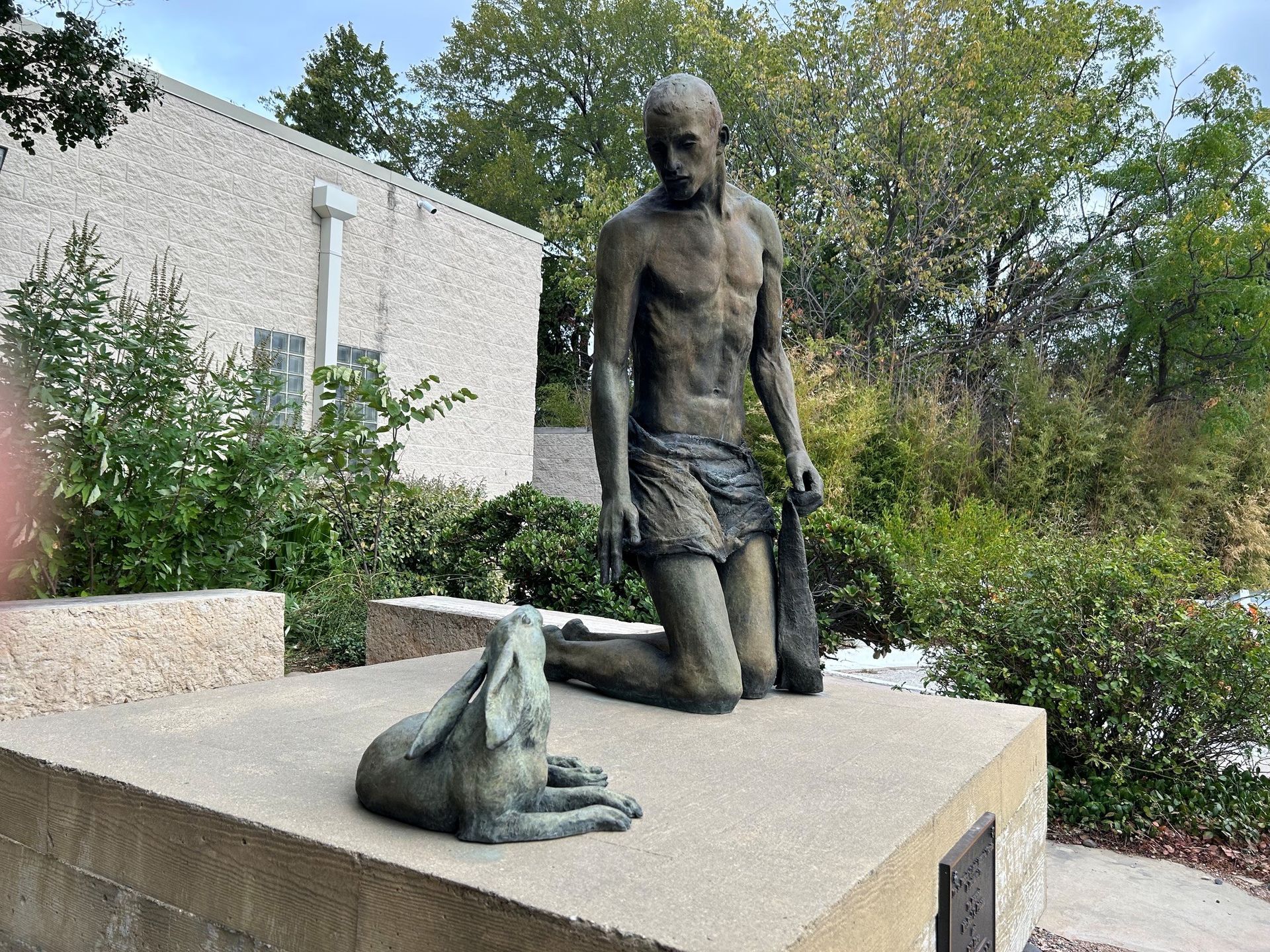
There is no denying that this world in which we live feels crazy, confusing, and, at times, scary. Is this the same world that Lao Tzu speaks of as being sacred? Is it the same world that God made and then proclaimed, “It was very good…”?

I suspect that most of us have had days in the recent past where the alarm clock goes off in the morning and we wish that we could pull the covers over our head and not face whatever inevitable chaos is going to be thrown our way. Or, when we do put our feet to the floor and dare to brave the day, we are struck with an overwhelming desire to “do something” to make this place in which we live better, only to be knocked in the head by the realization that there is so much to be done and I am only one person. How do we see the sacredness, the holiness in each day?

We must make a conscious choice to respond, rather than react, to what this day has laid out before us.

What if rather than reacting by passing judgement on all of the glaring imperfections and failings of the day, we respond by accepting that this day is exactly as it is designed to be and

thus we respond to it with love and gratitude? This is not to say that we should overlook injustice, suffering, and desired change; but instead, acknowledge that these harsh realities do exist and we are choosing to see and respond to them with a Christ-like heart. We bring the all that we have and all that we are on this day, consciously leaving behind the “has beens” and avoiding focus on the “should- and could-bes.”

Living in the present moment, acknowledging what today brings, imperfections and all, gives us insight into who we truly are and helps us to see clearly and appreciate all that is around us. Being fully present to the now helps us to learn and grow and gives us wisdom to take with us on tomorrow’s journey. If we respond to each new day by choosing to make this day better, even if only in a seemingly small way, we are giving a perfect gift to others and to ourselves. And, we are doing what Jesus would do. It is through our faith that, even in the midst of all that feels troublesome, we are able to see infinite possibilities rather than overwhelming problems.

PRAYER

Divine Creator and Maker, open my heart and mind such that I may be fully present to what this day brings, even its imperfections. Help me to respond with love and gratitude towards others and myself. Amen.

DEVOTION AUTHOR

Kris Baker
Order of St. Francis and St. Clare


Need Some Inspiration? Read our Daily Devotions

By Dan Peeler April 2, 2026
SCRIPTURE  1 Corinthians 11, 23b-25 On the night when he was betrayed, the Lord Jesus took some bread and gave thanks to God for it. Then he broke it he said, “This is my body, which is given for you. Do this to remember me,” In the same way, he took the cup of wine after supper, saying, “This cup is the new covenant between God and God’s people—an agreement confirmed with my blood. Do this to remember me as often as you drink it.” WORDS OF HOPE I’m sure that this passage, or a variation of these words, are among the most familiar excerpts of Scripture you hear every week when you participate in the breaking of bread. These words are the Apostle Paul’s which he recorded for all time as he served Holy Communion to his followers in Corinth. On this Maundy Thursday, we remember the establishment of that tradition in the event we now call The Last Supper. As the days of Holy Week come to an end, most people realize that Good Friday does not refer to a “good” event that happened on that day. The “good” part of the event is based on an ancient word, “goude”, meaning pious or holy. That designation began in around 1300 to signify the holiest of sacrifices. On the night before that sacrifice, Maundy Thursday commemorates Jesus’ final commandment in the sense of a mandate as he educated his followers in a ceremony that was to become known as Holy Communion. “Maundy” is a shortened version of “mandatum”, a Latin word meaning “command” but it’s more in the nature of an extension of the Love Commandment: “A new commandment I give to you, that you love one another: just as I have loved you, you are also to love one another.”(John 13.34) These words were delivered on the same evening as the Last Supper, as he washed his Disciples’ feet. The “mandate” that followed would serve as a reminder to them of the profound extent that love was to reach. Jesus loved them enough to die for them. He was about to literally give his body and his blood. That holy meal was to become a continual reminder of the salvation offered through the ritual of sharing through a meal of mutual love. As he emphasized “Remember me” he was telling them to remember that love has no limits; the mandate of peace on earth. PRAYER May we recall Jesus’ timeless words on this Maundy Thursday as we remember his life of boundless love. As we strive for a world free of hatred and mindless wars, may our love also have no limits. Amen DEVOTION AUTHOR Dan Peeler Order of St. Francis and St. Clare
By Hardy Haberman April 1, 2026
SCRIPTURE John 13:21-26 After saying this Jesus was troubled in spirit and declared, “Very truly, I tell you, one of you will betray me.” The disciples looked at one another, uncertain of whom he was speaking. One of his disciples—the one whom Jesus loved—was reclining close to his heart; Simon Peter therefore motioned to him to ask Jesus of whom he was speaking. So while reclining next to Jesus, he asked him, “Lord, who is it?” Jesus answered, “It is the one to whom I give this piece of bread when I have dipped it in the dish.” So when he had dipped the piece of bread, he gave it to Judas son of Simon Iscariot. WORDS OF HOPE Though this passage clearly foretells of the betrayal by Judas, I find the scene itself has a lot to say. The mention of “ One of his disciples—the one whom Jesus loved—was reclining close to his heart;” is what stands out to me here. This disciple, who is never named directly, essentially is laying with his head against Jesus’ chest, in his lap most likely as means were taken while reclining. It is an intimate and very touching image. It is a pesky reference that biblical scholars often debate and try to identify the individual. Some say it is John, the Evangelist, while others argue that is is a metaphorical reference meant to symbolizes the "abiding" relationship Jesus invites all believers into. There are even those who believe it was Mary Magdline, but there are other references to her and the unnamed disciple at Jesus’ tomb. I prefer to think of this as a hint to a same-sex relationship, though there is not any definitive scholarship on this interpretation. I suppose it will always remain a mystery, but it is one that speaks of a deep love and intimacy that resonates with me. Perhaps, at this pivotal moment in Jesus story we can take comfort knowing that Jesus was unafraid to show a physical closeness to his disciples. It reflects the very character of Jesus as being both fearless in his exposing of the one who would betray him and his love and closeness to a person who will most likely remain a mystery. PRAYER May we embrace the love exhibited by Jesus and hold those dear to us even closer, even when we may have fears about what is to come. Amen DEVOTION AUTHOR  Hardy Haberman
By Donald (Luke) Day March 31, 2026
SCRIPTURE  Romans 8:31-37 If God is for us, who is against us? Who can separate us from the love of Christ? Will hardship or distress... No, for in all such things, we are more than conquerors through Christ who loves us. WORDS OF HOPE On this Tuesday of Holy Week, sometimes called Jesus’ busiest of days, we observe Jesus in various interactions with every variety of religious leader, disciple, townspeople, and distractors. Everywhere he goes in Jerusalem, he seems to be followed by accusations, questions, and conflicts. Have you ever felt backed into a corner by life’s seemingly overwhelming challenges? Today’s Scripture contains some of the Bible’s most hopeful words and ones most of us need to hear every day. As Paul wrote these words to the young church at Rome, he was offering encouragement and instruction to them. Much like our own world, in the period of 50-60 CE, the Christian church in that city was in constant change. It had gone through an earlier purge of its Jewish citizens under the Emperor Claudius. Many of those Jews, who had been exiled at that time, now had returned to Rome and found that the young church which they previously knew had changed. With the earlier expulsion of its Jewish Christians, the church had become a predominantly Gentile congregation. Many of those returning Jews had probably lost their Roman homes, businesses, and social status. They returned like immigrants to the church they had helped to create, and their welcome back was probably less than enthusiastic. For those faithful Jews, it must have been heartbreaking to sense a separation from all that they had loved in their church group. In our present time, many people are suffering loss. Sometimes, it is manifested in the death of a loved one, loss of a job, or even faith in our own government. Paul encouraged those Jews and Gentiles in the Roman church when he reminded them that hardships happen to all, but hope must not be lost. Paul knew that our greatest treasure, which is our loving relationship with Christ Jesus, cannot be taken away from us. His encouragement continues: "For nothing can separate us from Christ, for I am convinced that neither death nor life, nor rulers, nor things present or in the future, nor anything else in creation will be able to separate us from the love of God in Christ Jesus, our Lord." (Romans 8:38-39) PRAYER Grant us Lord God, not to be overly anxious about the physical things of this earthly life, but to hold dear and love those spiritual gifts which are part of your loving providence for us. Even while we are placed here among those earthly things which are passing away, help us to hold fast to your loving spiritual gifts which shall endure. We pray through Jesus's name. Amen. DEVOTION AUTHOR Donald (Luke) Day Order of St Francis and St. Clare
By Jonathon McClellan March 30, 2026
SCRIPTURE Isaiah 48.18 Oh, that you had paid attention to my commandments! Then your peace would have been like a river, and your righteousness like the waves of the sea… WORDS OF HOPE Right or Righteous? On this Monday of Holy Week, is it more important to be righteous than it is to be right? If you do not have love, then you have gained nothing by being right. Words with malice, judgment, and manipulation in them defeat the purpose of being right. Some people look at the surface and judge incorrectly, so isn’t it great that God never asked us to judge? You can be right, but that doesn’t always mean it is time to be right. Sometimes being righteous means being patient, kind with your words, and sincere. If I’m right, what does it gain me if my sister is harmed? Today, people have a hard time coming together if they don’t always agree. Isn’t it more righteous to agree to disagree in spirit, not just in word, by coming together to the same table? I’d rather not know anything. Consider me a fool. They call me an idealist, but I ask, “Do I have to be of a certain religion to feed the hungry?” No one I ever helped ever refused me because of my sexual orientation, the color of my skin, or any of my personal beliefs. A man dying of hunger will rarely refuse a meal. Should we make requirements of those who want to give? There is something truly beautiful in coming together. I want to forget about who is right and who is wrong and laugh over the silliness of it all. How did things get so far away from us? We are so divided now. Being righteous is forgiving when it is hard, when you know you are right, and when he or she is your enemy. Invite your enemy to your table. You are the gift the world needs. The love has to start somewhere, and it is with you. PRAYER Lord, show me a table where a Christian and a Muslim sit together. On another end, let there be an atheist next to a Rabbi, a prostitute next to a saint, a monk next to an assassin, and an Israeli next to a Palestinian. Let there be peace in our homes, so that when we leave, we can go in that peace with the hopes that it will spread to others. There is so little love for the stranger all because we don’t know who she is. Let the walls to our hearts come down and the doors swing open. Amen. DEVOTION AUTHOR Jonathon McClellan Order of St. Francis and St. Clare
By Jonathon McClellan March 30, 2026
SCRIPTURE Isaiah 48.18 Oh, that you had paid attention to my commandments! Then your peace would have been like a river, and your righteousness like the waves of the sea… WORDS OF HOPE Right or Righteous?  On this Monday of Holy Week, is it more important to be righteous than it is to be right? If you do not have love, then you have gained nothing by being right. Words with malice, judgment, and manipulation in them defeat the purpose of being right. Some people look at the surface and judge incorrectly, so isn’t it great that God never asked us to judge? You can be right, but that doesn’t always mean it is time to be right. Sometimes being righteous means being patient, kind with your words, and sincere. If I’m right, what does it gain me if my sister is harmed? Today, people have a hard time coming together if they don’t always agree. Isn’t it more righteous to agree to disagree in spirit, not just in word, by coming together to the same table? I’d rather not know anything. Consider me a fool. They call me an idealist, but I ask, “Do I have to be of a certain religion to feed the hungry?” No one I ever helped ever refused me because of my sexual orientation, the color of my skin, or any of my personal beliefs. A man dying of hunger will rarely refuse a meal. Should we make requirements of those who want to give? There is something truly beautiful in coming together. I want to forget about who is right and who is wrong and laugh over the silliness of it all. How did things get so far away from us? We are so divided now. Being righteous is forgiving when it is hard, when you know you are right, and when he or she is your enemy. Invite your enemy to your table. You are the gift the world needs. The love has to start somewhere, and it is with you. PRAYER Lord, show me a table where a Christian and a Muslim sit together. On another end, let there be an atheist next to a Rabbi, a prostitute next to a saint, a monk next to an assassin, and an Israeli next to a Palestinian. Let there be peace in our homes, so that when we leave, we can go in that peace with the hopes that it will spread to others. There is so little love for the stranger all because we don’t know who she is. Let the walls to our hearts come down and the doors swing open. Amen. DEVOTION AUTHOR Jonathon McClellan Order of St. Francis and St. Clare
By Dan Peeler March 27, 2026
SCRIPTURE  Nehemiah 9.14-15 You made known to them your holy Sabbath and gave them commands, decrees, and laws through your servant Moses. In their hunger you gave them bread from heaven and in their thirst you brought them water from the rock; you told them to go in and take possession of the land you had sworn with uplifted hand to give them. WORDS OF HOPE As Lent nears its end, today’s reading is from a Hebrew Scripture prayer of praise to God from the Prophet Nehemiah. The wise leader of his people is reminding them of God’s past mercies and acts of grace in the most effective technique a public speaker can use to inspire and captivate his audience: Storytelling. -And the more familiar the story, the better the audience remembers the lesson connected to it. Nehemiah is telling the Hebrew people a tale of Moses they have heard since birth and could usually repeat orally, since theirs was a society of very few readers. They knew of the heroic and miraculous events of their history through repetitions around the glow of campfires, not eBooks. They looked forward to reliving past triumphs through the best storytellers among them and Nehemiah was among the most popular. His job was to inspire a discouraged and exhausted people to restore their former glories through the almost impossible task of rebuilding the walls of their fallen city. He inspired them well because in a near-miraculous amount of time, they actually did it! In all my years of teaching the very young as a minister to children, age never separated us in doing together what we loved best: sharing the greatest stories ever told, and each time gaining a little more insight into our own lives through their timeless adventures. Even now, when I talk to friends about the trials of Jonathan and David or the courage and selfless sacrifices of Joseph or Abigail, I feel their joys and sorrows as if they had been members of my own family. And spiritually, they were. We also learn some of our best lessons through those ancient family members’ mistakes, and their mistakes were generous in number. The Bible writers never failed to report the frailties in the humanity of its superheroes. But, as in today’s text, the grace and empowerment of God in them never faltered. Do we still have any walls to rebuild as we reflect on our Lenten journey today? There is always time and near-miraculous events can still happen. And yes, there are still prophets around to inspire us if we are alert and open to their wisdom. PRAYER God of unforgettable stories, may the Prophets of Old teach us to be the Prophets of Today. Help us to learn from those great family legends that we may create even greater ones for our future generations to tell. Amen. DEVOTION AUTHOR Dan Peeler Order of St. Francis and St. Clare
More Posts