By Reed Kirkman
•
September 28, 2026
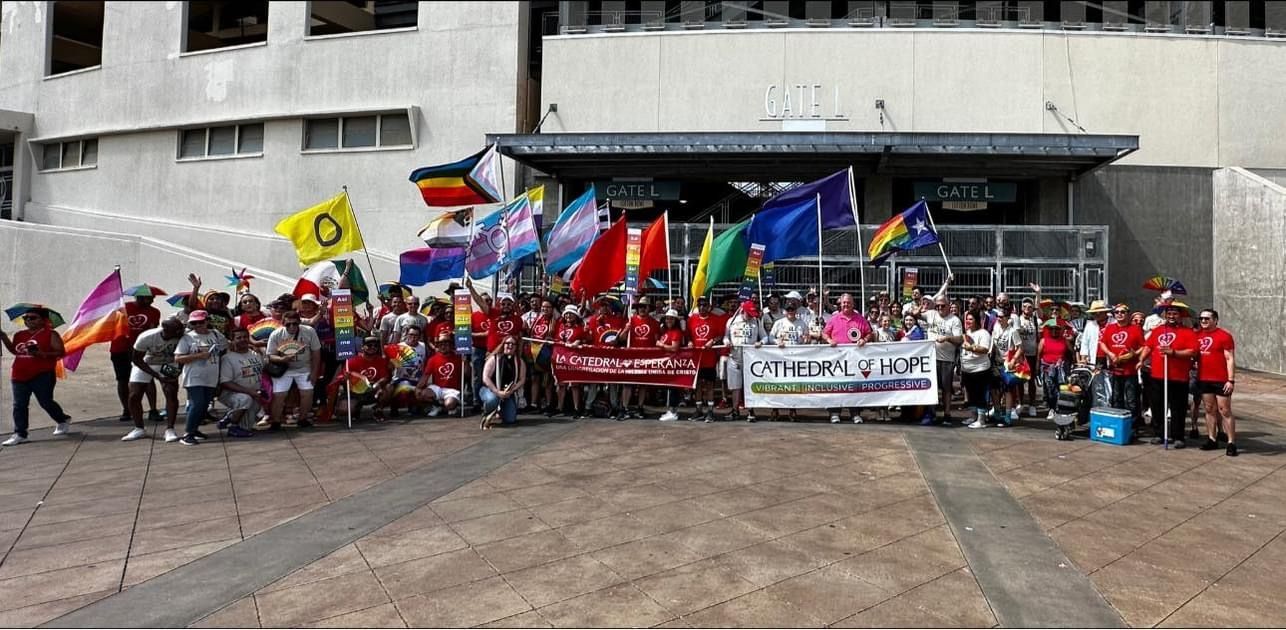
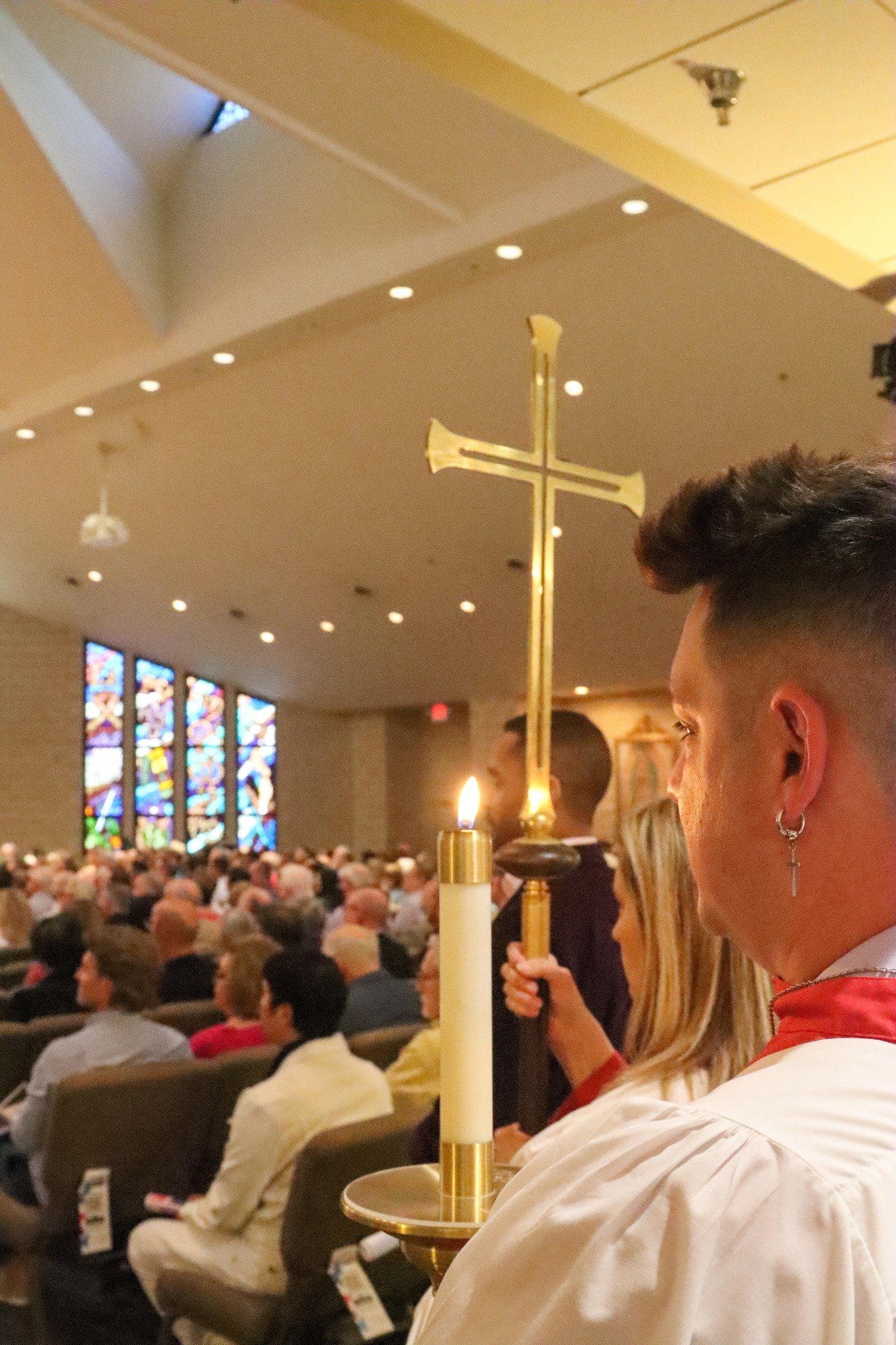
SCRIPTURE Philippians 1:3–14 I thank my God every time I remember you.” WORDS OF HOPE Family Day According to Lilo & Stitch, “ohana means family.” Nobody gets left behind or forgotten. It is a simple idea, perhaps almost too simple for adults who have spent centuries finding ways to make family complicated. But children sometimes understand what grown-ups forget: family is about belonging. It is where we learn our names, our stories, our jokes, our traditions, and those wonderfully strange rituals that make a household uniquely itself. It is also where somebody remembers the embarrassing story you were absolutely certain had been permanently deleted from history. On Family Day, then, I find myself wondering: What if family was never meant to fit inside one picture? What if the mystery of family is that it keeps becoming larger than the definitions we give it? We tend to carry around an image of what a family is supposed to look like: a mother, a father, 2.3 children, a pet, a minivan, a mortgage, and perhaps a white picket fence for good measure. Somewhere along the way, we took one particular arrangement and promoted it from one way of being a family to the definition of family, as though God had handed us a blueprint from heaven and said, “Congratulations. This is the only acceptable floor plan.” But real families have never been that tidy, and neither has Scripture. The Bible is filled with widows and orphans, unmarried people, blended and extended households, friends who become family, and communities that gather around people when traditional structures fail. Scripture gives us families who are complicated, grieving, surprising, imperfect, and occasionally downright chaotic. Maybe the Bible's refusal to give us one perfect family portrait is not a problem to solve. Maybe it is an invitation to wonder at all the ways love creates belonging. I grew up in what many people would describe as a traditional nuclear family. I was raised by a mom and dad, and I have a younger sister who is about three and a half years younger than me. Today, another branch has been added to our family tree through my nephew, Maverick. And I get to be the best uncle ever. I am grateful for the family I was given—the people who remember my childhood, my awkward phases, my victories, my failures, and the stories I would prefer never to be repeated at Thanksgiving. Families have a remarkable memory, after all. It remembers the adorable things we did, the ridiculous things we did, and, inconveniently, the things we were really hoping everyone else had forgotten. But being grateful for my own family does not mean believing everyone else's family must look like mine. The older I get, the more I wonder whether the beauty of family is found not in uniformity but in its astonishing variety. Spend some time at Cathedral of Hope, and that variety becomes visible almost immediately. I see two men raising children. I see two women raising children. I see LGBTQIA+ families, grandparents raising grandchildren, blended families, adoptive families, single-parent families, multigenerational families, and families whose stories refuse to fit neatly inside a census form. And beneath all those different arrangements is something wonderfully ordinary: people loving one another, laughing together, crying together, caring for one another, showing up when somebody needs help, and occasionally wondering who ate the last cookie. Two dads raising a child is not a sin. Two moms raising a child is not a sin. An LGBTQIA+ family is not a defective version of a “real” family. Families that take other forms deserve the same dignity and care. Even polyamorous families, remind us that human love has never been quite as tidy as the boxes we try to build around it. Perhaps the better question is not whether a family looks familiar to us, but whether love is flourishing there—whether people care for one another, protect one another, take responsibility for one another, and show up when it matters. For some families, that sense of connection reaches backward across generations. Family can be carried through names, stories, traditions, and memories that existed long before we were born. Scottish clans offer one striking example. I have a connection to Clan Stewart, and that connection reminds me that family can sometimes reach farther into the past than our own memories can. The Stewarts were not simply a Scottish clan; the Stewart dynasty eventually became one of the great royal dynasties of the British Isles. That history eventually leads us to the modern British royal family and to King Charles III, who inherited the Crown after the death of his mother, Queen Elizabeth II. Whatever we may think about monarchy, there is something fascinating about the way family can carry history forward—through names, traditions, responsibilities, stories, and sometimes even titles. And then there are chosen families—the people who may not share our DNA or our last name but somehow become part of the story of who we are. As an LGBTQIA+ ally, I have a chosen family at Cathedral of Hope. At the 10 a.m. service, I sit in the front row behind the acolytes and lay ministers of worship, among what I sometimes affectionately call the Holy Troublemakers. We ask questions. We challenge assumptions. We believe LGBTQIA+ people belong fully in the church. Not halfway. Not with an asterisk. Not after passing some theological entrance exam. Fully. We believe faith should lead us toward compassion, welcome, justice, and love rather than fear and exclusion. But these are not simply theological convictions for me. These are my friends. We do things together. We laugh together. We cry together. We celebrate together. We sit with one another when life gets difficult. We show up. We make memories. We probably occasionally drive one another a little crazy, because apparently that is also one of the privileges of family. The household of God is larger than our family trees. The table of God is wider than our dining rooms. God's love keeps surprising us with people we did not expect to call family. So, celebrate the family you were born into. Give thanks for the family you have chosen. Remember the people who have laughed with you, cried with you, prayed with you, celebrated with you, and loved you into becoming who you are. Then look around. Who is standing at the edge of the room, wondering whether there is a place for them? There is. Pull up a chair. Because ohana means family. And perhaps the deepest miracle of all is that God's family keeps reminding us that nobody is meant to be left behind or forgotten. PRAYER Loving God, thank you for the many forms family can take—for the families we are born into, the families we create, and the chosen families who walk beside us. Thank you for every parent, child, sibling, grandparent, friend, and community that reminds us we belong. Help us to make room at our tables and in our hearts for all people. May no one be forgotten, rejected, or left behind. Teach us to love as you love: generously, compassionately, and without conditions. May we always remember that your family is bigger than our definitions and your table has room for everyone. Amen DEVOTION AUTHOR Reed Kirkman