Was Jesus Married?

Rev. Neil

Greetings,

We are now in the third week of our current sermon series, “Ask Me Anything”, and as I add, “theologically!” Over the past couple of weeks, we have been responding to some of the questions that you requested us respond to as we grapple with faith and the deeper questions that we may have pondered.  

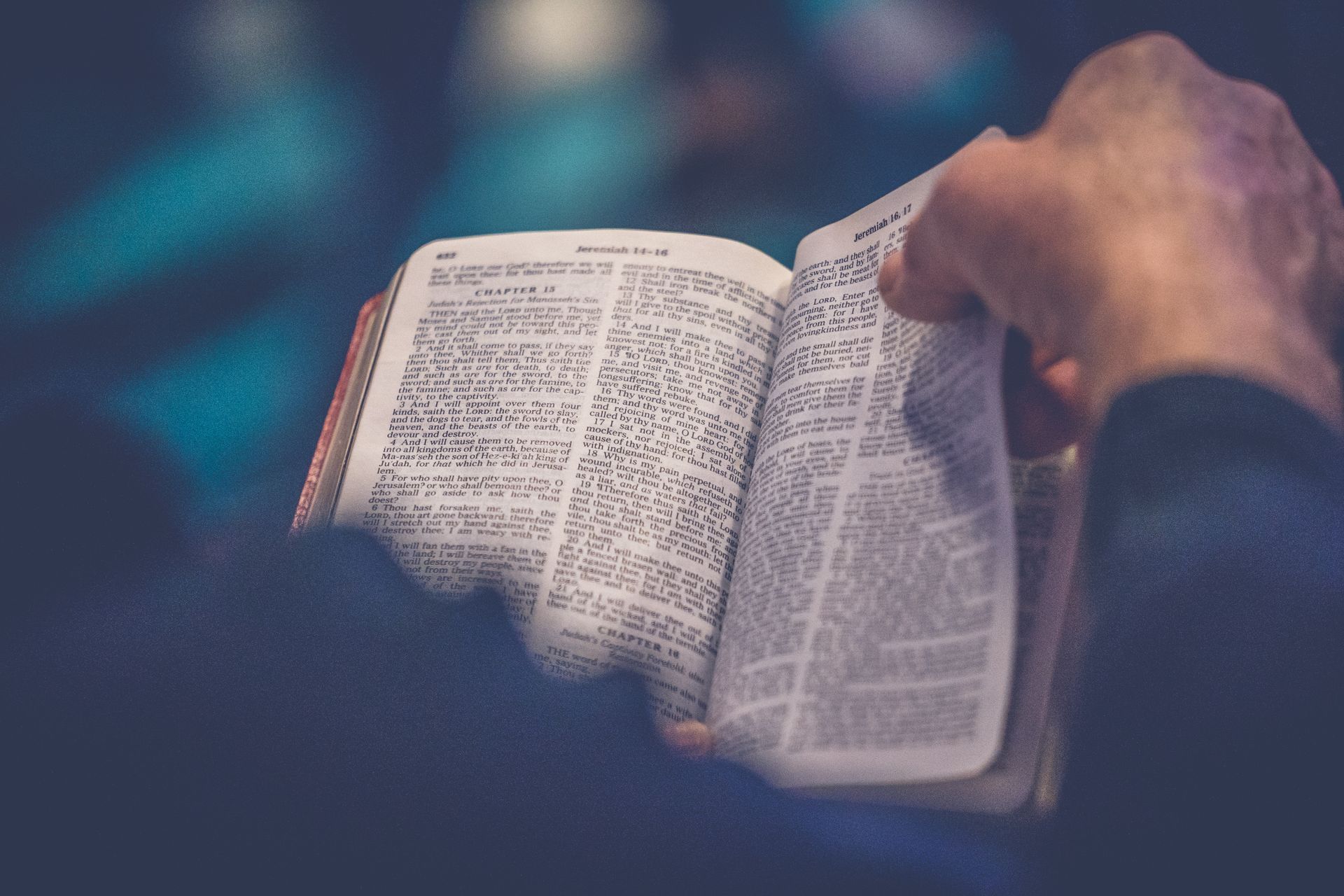
This Sunday is Mother’s Day and the question that we ponder is “Was Jesus Married?” I am eager to tackle this question, especially considering the Scripture that has been selected for this Sunday. Over this past week there has been a lot to process, specifically in relation to the unrest in our country and in our world. 

The leaked opinion of a potential reversal of Roe vs. Wade and the domino effect that this opens, affecting minority groups and legal protections. It is another time in our movement to remain vigilant and activated and I want to assure you that we will do everything we can, in response to our faith, to protect the most vulnerable in our community and in our world. Jesus speaks of his mother often and we see her at many significant moments in Jesus’ life.  

As we gather on Sunday, we too will honor those who have been “mothers” to us. Some will have been biological and others who have stepped in and been “mothers” toward us. I look forward to sharing worship this Sunday as we gather in person and online to respond to this question and the many other questions that we face in today’s world. 

We are better, together. 

Rev. Neil Signrature

Need More Inspiration? Read our Daily Devotions

By Dr. Pat Saxon February 12, 2026
READING  “We who believe in freedom cannot rest until it comes.” Ella Baker “Justice cannot be attained until those who are not afflicted are as outraged as those who are.” Ella Baker WORDS OF HOPE Born in 1903 in Norfolk, Virginia, Ella Baker is known as the Mother of the Civil Rights Movement.* Her inspiration to stand strong in the face of oppression came early in life hearing the narratives about her maternal grandmother “Bet” Ross who was born into slavery in Halifax, North Carolina. One impactful story was how her grandmother refused to marry the man her slave owner had chosen as her husband, an act of personal integrity and resistance she would pay for with a beating and a sentence of hard labor in the fields. But it did not break her. She could always rally herself to attend to the celebrations at the plantation and dance until the early hours of the morning--evidence that her spirit was unbowed. Her mother set an early example of activism in her work with the Black Baptist Women’s Missionary movement, women who aspired to the values of strength, humility, piety, and selfless service. The values imprinted themselves in Ella and her siblings traveled with her for meetings. In high school and college at Shaw University in Raleigh, North Carolina, Baker would distinguish herself, graduating as Valedictorian and already engaging in resistance against unjust policies. In a time when the voices and vision of male leaders overshadowed women, she became a power and presence. In the 1920’s she traveled to New York to engage in social justice work and was swept up in the fervent artistic and intellectual life of the Harlem Renaissance. She held offices in the NAACP whose 117 th anniversary we celebrate today, becoming the highest-ranking woman as National Director of Branches, but she felt the organization was too bureaucratic and out of touch with the lives of ordinary black people. Later she helped organize the Southern Christian Leadership Conference (SCLC) with Rev. Dr. Martin Luther King. After the Montgomery Bus Boycott in 1955, catalyzed by Rosa Parks’ refusal to give up her seat to a white passenger, Baker co-founded In Friendship to help support activism in the South and provide for the needs of those who had been incarcerated in protests. She did not forget “the nameless cooks and maids who walked endless miles for a year to bring about the breach in the walls of segregation.” Throughout her life she dedicated herself to the economic struggles of ordinary people, securing voting rights, nonviolent resistance, and organizing at the grass roots level. Developing young people’s gifts and skills for leadership was another of Baker’s passions. Rather than encouraging the young black college students who had protested segregated lunch counters in Greensboro, NC, to join SCLC, as Rev. Dr. King envisioned, she invited them to a meeting at her alma mater Shaw University, a gathering which would lead to the formation of The Student Nonviolent Coordinating Committee (SNCC). Such notables as Diane Nash, Marion Barry, and John Lewis were among these next generation leaders and all found her extraordinarily compelling. Howard Zinn, another of the respected elders of SNCC, remembers that one day as protesters were being released from jail, he saw Baker not exercising her rhetorical skills in the media spotlight, but sitting alone at a table, talking to each person, asking What do you need? Do you need a meal? Medical Care? Funds for being off work? In SNCC they spoke of her as Godmother and Fundi, a Swahili term that translates one who passes along skills from one generation to another. In a time when many political leaders are practicing erasure of the past of people of color and LGBT+ folks, let it be an act of resistance that here we resurrect the memory of this remarkable leader of the Civil Rights movement. PRAYER Grandmother, let your voice and vision come to us today, guiding us in the path of justice and non-violent resistance. Amen. DEVOTION AUTHOR Dr. Pat Saxon
By Kris Baker February 10, 2026
READING … Don't speak of love while practicing hate with tools of fear…. Rev. Gerald Dillenbeck WORDS OF HOPE I looked at the prompt for today’s devotion, “All the News That’s Fit to Print Day,” and thought to myself, “Well, this is going to be a very short reflection.” It is easy to make a list of what I consider “news” that is unfit for print; what do I consider print-worthy news? What do I consider “good news”? My thoughts went immediately to the Good News given to us in the Gospels of Jesus. Perhaps the most important good news that Jesus shares is the words of The Beatitudes (Matthew 5:3-10), spoken during his Sermon on the Mount. Blessed are the poor in spirit, for theirs is the kingdom of heaven. Blessed are those who mourn, for they will be comforted. Blessed are the meek, for they will inherit the earth. Blessed are those who hunger and thirst for righteousness, for they will be filled. Blessed are the merciful, for they will be shown mercy. Blessed are the pure in heart, for they will see God. Blessed are the peacemakers, for they will be called children of God. Blessed are those who are persecuted because of righteousness, for theirs is the kingdom of heaven. Shortly after his baptism and temptation in the wilderness, Jesus spoke the words to a crowd, “Repent, for the kingdom of heaven is at hand.” These words mark the beginning of his life as a preacher. The Sermon on the Mount, however, is said to be his first sermon. This led me to try to understand the difference between preaching and sermonizing. The two actions are used synonymously by many. Some say, however, that the distinction is that both are persuasive speaking, sermons are specifically delivered by a clergy person in a religious context. I then found an explanation that seemed to clarify things a little more for me. Preaching is intentionally persuasive and plays to our emotions. Sermons, on the other hand, are intended to convey information, facts, without the specific intention of eliciting an emotional response. I don’t know how accurate this distinction is, but it makes sense to me as to why Jesus’s words in Matthew 5 are called a sermon. They are informative words that Jesus is imparting to the crowd. They are the good news, the news worth printing. In these words of the Sermon on The Mount, or The Beatitudes, Jesus makes eight statements. He doesn’t use “scare tactics.” Jesus doesn’t speak of consequences. He simply makes eight statements. As we read them today, they are eight powerful statements, eight powerful statements that, if you think about it, are the sum of all of Jesus’s teaching throughout his ministry. Would the world perhaps feel a little more gentle and a little more hopeful if those who support public display of the Ten Commandments instead wanted to display, and more importantly to believe and live by, Jesus’s words from the Sermon on the Mount? PRAYER Dear God, let us give thanks for all those who were and are living examples of Jesus’s words and teaching, those who exemplify peace, pureness of heart, those who show mercy and a hunger for righteousness, those who mourn, those whose resilience rises as meekness. Today we remember with gratitude especially Richard Allen, Absalom Jones, James Varick, Harriet Tubman, Booker T. Washington, Mary McLeod Bethune, Marion Anderson, Rosa Parks, Martin Luther King, Jr., Ruby Bridges, Fannie Lou Hamer, Barack Obama and all those brothers and sisters of color whose lives have made our world a better place for all of us. Amen. DEVOTION AUTHOR  Kris Baker Order of St. Francis and St. Clare
By Jan Nunn February 9, 2026
SCRIPTURE  Romans 10:12 The Good News God loves everyone equally. It does not matter the color of your skin or how you identify. WORDS OF HOPE My hero of hope for today is Cheryl Browne. Cheryl Browne, first African-American contestant for the title of Miss America in 1971. Cheryl Adrienne Browne was born in New York City in 1950 and studied dance at LaGuardia High School in Manhattan. After high school, she moved to Decorah, Iowa to study dance at Luther College. After winning the Miss Decorah contest, on June 13, 1970, she beat 19 white contestants to win Miss Iowa, making her eligible to compete for the 1971 Miss America crown. Cheryl became the first black woman to compete for the Miss America title, the first African American contestant to make it to the final, even though competition rule number seven, instituted during the 1930s, which read: “Contestants must be of good health and of the white race,” had been abolished 30 years before in 1940. Her win as Miss Iowa and appearance at the Miss America pageant generated criticism in newspapers, the Miss Iowa pageant board, and to Browne herself. The criticisms ranged from her ethnic background to the fact that she had only lived in Iowa for a short time before entering the competition. In a newspaper interview Browne stated that she was “surprised that Iowa, with its conservative traditions, silent majority, and small black population (1 percent of the state's 1970 population of 2,800,000) was the first state to pick a black girl as its representative.” Years later, speaking about her appearance in the contest, Browne said, “Iowans were very accepting of me, but I think it took the country by surprise to realize that it was a young woman from Iowa who became the first African-American contestant. I don't feel I personally changed the pageant, but I feel that my presence expanded people's minds and their acceptance. And, in subsequent years, they were much more open to African-American candidates [...] I didn't feel hounded by the press, but it was obvious that security was tight —especially at Convention Hall rehearsals when our chaperones weren't always present.” The 1971 Miss America title was won by Phyllis George. Cheryl Browne graduated from Luther College in 1972. She later married Karl Hollingsworth, worked in the financial industry, and had two children. We owe a lot to all our Black siblings who had the courage to be the "firsts" in our nation to break the color barrier. I am thankful to God for giving them the courage to step out and endure all they did for the sake of being first. It was a long time before commercials and television shows and billboards had representation of people of color. It was difficult for them to break into a world controlled by white people! And churches were the worst! I often heard it said that the Sunday 11am hour was the most segregated hour in America. PRAYER God of all people, I am so glad that the song of my childhood is true, even if my church did not practice it. Jesus loves the little children- red and yellow, black and white all are precious in Your sight! Help us love all your children. Not just during Black History Month. DEVOTION AUTHOR Jan Nunn CoH volunteer
By Thomas Riggs February 6, 2026
SCRIPTURE  James 3:13-16 Who is wise and understanding among you? Let them show it by their good life, by deeds done in the humility that comes from wisdom. But if you harbor bitter envy and selfish ambition in your hearts, do not boast about it or deny the truth. Such “wisdom” does not come down from heaven but is earthly, unspiritual, demonic. For where you have envy and selfish ambition, there you find disorder and every evil practice. WORDS OF HOPE Many of us find ourselves drawn to wholesome and uplifting characters and people. We’re drawn to the inherent goodness of Superman (and the actor David Corenswet who plays him), the unwavering optimism and kindness of Ted Lasso (and the actor Jason Sudeikis who created him), the smart and kind Elle Woods (and the actress Reese Witherspoon who played her), or the tough-love patriarchal Uncle Phil (played by the equally cool and supportive James Avery). These characters not only entertain and inspire, but in many ways, they make us feel seen, heard, and understood. We admire and often want to be like “nice” people who see the world through optimistic eyes, living a humble and selfless existence. When the apostle James asked the piercing question “Who is wise and understanding among you?”, his answer was not found in blustering fools who coexist comfortably with injustice, but among those whose life showed wisdom through a “gentleness born of wisdom”. Rev. James H. Cone, a pioneering American theologian and founder of Black Liberation Theology, argued that Christian wisdom must be measured by its solidarity with the oppressed and its resistance to systems that degrade human dignity. Any “wisdom” that coexists comfortably with “bitter envy and selfish ambition”, Cone insisted, is not from God. It is the source of disorder and evil. Wisdom that protects power at the expense of people is, by biblical definition, false. “But the wisdom that comes from heaven is first of all pure; then peace-loving, considerate, submissive, full of mercy and good fruit, impartial and sincere. Peacemakers who sow in peace reap a harvest of righteousness.” This peace is described by Dr. Martin Luther King, Jr. as the presence of justice. Black theology reminds us that peace is not a concept, but something practically made. It is created through courage, truth-telling, and communal love. The apostle James, the Rev. Cone, and Dr. King invite us to examine the wisdom shaping our words, decisions, and relationships. Are we producing humility or self-protection? Mercy or control? Disorder or life? How can we cultivate a wisdom that does not boast, a peace that does not lie, and a courage that does not dominate? PRAYER God of truth and justice, strip from us the false wisdom of envy, ambition, and self-protection. Teach us the humility that shows up in merciful deeds and the courage that stands with those pushed aside. Plant in us your wisdom from above— pure, peace-making, and full of life— so that our lives may bear a harvest of righteousness. Amen. DEVOTION AUTHOR Thomas Riggs
By Charlie C. Rose February 5, 2026
SCRIPTURE  John 1:5 (NIV) The light shines in the darkness, and the darkness has not overcome it. WORDS OF HOPE I was once called a “Pollyanna” on social media for an attitude that was too optimistic and perhaps too cheerful. I quickly realized that judgment was surface level, based on a single post, and couldn’t touch what runs much deeper in me. I sent my friend a private reply, saying I could understand how she might see it that way. But I also explained some origins of my optimism. I didn’t grow up in a particularly happy household. We lived under the constant threat of my father’s unpredictable behavior. He was both an alcoholic and bipolar. At least one of those conditions wasn’t his fault and bipolar medications were a few decades away. As to the alcoholism, he came from an era when heavy drinking was accepted, even encouraged, as well as the notion of men ruling the roost with an iron fist; those days when discipline often crossed into what we would now call abuse. We never knew what mood we'd get. When someone lives that way, it’s hard to trust the rare moments of calm, or the sudden bursts of happiness that can tip into mania. Looking back at childhood photos and my grandfather’s 8mm home movies, I notice a consistent optimism on my face. I wasn’t hiding my feelings, exactly—I had found refuge in creativity and comic books. That world became my escape, and, I think, my survival. There was also something inherent in me, a defiance of the depressing household climate. Some of us are born into circumstances that force us to develop inner light early. I know I sublimated those feelings by escaping into my fantasy world of writing and art. What we create in our minds often shapes our emotions and actions. Today is Optimist Day. What stories of your own past have taught you to be optimistic today? We live in a fragile world. These are violent, unpredictable times and the actions, the hopes, of your younger self should spark the same optimism many of us had in our childhoods. It’s ok to dream, to have visions of a better world, to know that silver linings are still not out of style. I recently watched the movie Pollyanna again and better understood the word’s origin. I’m a little prouder now to wear that label— and I should remember it more often. So should all of us. Everyone needs a smile. Even our darkest moments are temporary. PRAYER My Creator, I know I find it difficult on some days to be a beacon of hope to the people I encounter, so I ask that you help me see past my own despair as a bridge for somebody else. In your name, Amen DEVOTION AUTHOR Charlie C Rose Order of St. Francis and St. Clare
By Hardy Haberman February 4, 2026
SCRIPTURE  Luke 6:24-25 “But woe to you who are rich, for you have received your consolation. Woe to you who are full now, for you will be hungry. Woe to you who are laughing now, for you will mourn and weep.” WORDS OF HOPE This is from the passage in Luke often called the “Sermon on the Plain”. In it, Jesus doesn’t seem too fond of rich people, more specifically greed. Because of this I don’t hear this quoted much by folks preaching “Prosperity Gospel”. Seems to me Jesus was not a fan of transactional faith. It feels too much like a business arrangement and for me my relationship with the Divine is not a business model. I believe Jesus was encouraging us to weigh the importance of possessions in our pursuit of happiness and grace. Things hold no permanence, but faith and God’s grace are eternal if we open ourselves to that miracle. I was reminded of this recently when I saw a building that had always been a fixture in my life’s history being imploded to make way for something else. That edifice that seemed so solid and permanent was gone in seconds. What remained for me were memories of it and the people and events surrounding it. Those cannot be blown up and carted away. It is those memories that I find much more valuable than the building. Like my faith, they are contained, not in an edifice, but in my mind and to some extent my soul. PRAYER Eternal God, may we receive your grace and hold it fast to our souls for it has more value than any earthly riches. Amen. DEVOTION AUTHOR Hardy Haberman
More Posts